simplicity

My boys were singing in the car this morning on the way to school…loudly…and giggling the whole time. Effervescent joy permeated the air lending levity to the mundane.As they sang along with Marvin Gaye and Tammi Terrell to “Ain’t No Mountain High Enough,” I paused.

School mornings bring a bit of insanity and frustration to my house (I don’t think I am alone here). Getting lunches and backpacks ready…cajoling kids out of bed…debating the “I’m not hungry for breakfast” dilemma…fuel the potential for disagreement and discord. (I should mention at this point that I am an all out morning person in a house full of boys who possess no love for the hours before 8am–like I cannot wait until they are old enough to be caffeinated!) I work to preserve their moods but also my own because it is impossible to walk into your day feeling like it will be successful when you have spent the morning arguing over the location of socks and the necessity of  brushing away morning breath.

The singing without abandon in the car freed all of us from whatever morning drama had occurred. And it reminded me. It is truly the simple moments that populate my day with positivity. Without being present in those moments…noticing and feeling grateful for them…they would flicker and extinguish themselves into meaninglessness. Lacking focus on these smaller moments of delight would make it easier for negativity and pessimism to creep into my internal dialogue. When I’m consumed with the busy-ness of my life, when I let the less important things creep up the hierarchy of my priority list, I don’t take the time to notice and revel in these bits of positivity and in the people I love most…and my entire outlook changes.

The point of this positivity project blog series was to shift my gaze–to realign it. This morning’s pause offered proof that intentionality is certainly a crucial step to mindset and outlook. This morning’s pause set the tone for the day and realigned my perspective moving forward (so, when a student in my AP Lit class wondered if Marianne Dashwood would be a VSCO girl, it was easier to crack up in laughter, lean in and be grateful for the gift of my job and the even greater gift of my students).

Flashes of delight fill our days, but they don’t wait around too long hoping to be noticed. We have to be in the moment, expectant, hopeful, ready to grasp them in gratitude and to store them up like fireflies in a jar.

Things don’t have to be complicated to be worth our attention. Embracing simplicity can change everything…if we let it.

story stones

“Before you know what kindness really is

you must lose things,

feel the future dissolve in a moment

like salt in a weakened broth.

What you held in your hand,

what you counted and carefully saved,

all this must go so you know

how desolate the landscape can be

between the regions of kindness…


…You must wake up with sorrow.

You must speak to it till your voice

catches the thread of all sorrows

and you see the size of the cloth.

Then it is only kindness that makes sense anymore…

only kindness that raises its head

from the crowd of the world to say

It is I you have been looking for,

and then goes with you everywhere

like a shadow or a friend.”

–Naomi Shihab Nye—excerpted from “Kindness”


Tonight I witnessed something so beautiful that it called this poem to mind immediately. In this world we talk so much about the importance of choosing to be kind, but in this poem, Nye speaks to the interwoven relationship that empathy and kindness share.

Lately, I have been helping a dear friend facilitate a book study at her church. The book? Rachel Held Evans’InspiredThis book is a gorgeous testament to one woman’s struggle with the difficulties and questions she found in reading and understanding the Bible as a part of her faith life. Evans reveals through her vulnerability,  her creativity, and her honesty the mystery and frustration brought about in wrestling with faith. Yet she also carries her reader to the other side of the struggle in smart and sensitive ways. This book came to me when I needed it and sharing with others has been the greatest gift.

Over the last couple of weeks, we have been working through a chapter on Deliverance Stories…stories of times in the wilderness…stories of struggle that end with physical, emotional, mental salvation…stories of striving to know ourselves all over again. In order to really dive into this material, we couldn’t convene in conversation about Evans’ text or about the Biblical texts she references. In order to truly realize the weight and depth of these stories, we needed to reveal the truth of our own time spent in the wilderness. We needed to be vulnerable and to trust each other. Our small community needed to believe that our stories would be cherished and held as sacred.

That kind of bond is tough to create 4 weeks into a once a week study.

Yet, somehow, it happened. Tonight, I watched the women of this group share their deliverance stories in an incredibly bold and courageously honest way. I sat in awe of their willingness to not simply narrate their stories loosely but to extend insight and emotion that allowed us to walk the path with them…into the dark and disorienting wilderness and then out to the other side. I walked away from that room not only knowing each member of this small group better, but knowing myself better too.

Stories have this effect, when we are available to listen and to be present, and when we are willing to share our own honestly with those around us…when we feel we can let others in. Shared lived experiences create a sense of empathy within us that allows us to live more deeply into our community, to keep kindness more readily available. We are more likely to live in love and act in kindness when we have access to the knowledge that there is always more to the story than what we think we see, what we think we know. We are more likely to be better humans to each other, to celebrate each other when we empathize rather than judge, when we lean in rather than walk away.

Tonight was a reminder…of the comfort that can be found in community, of the value of story, of the nuances and shades of kindness. And I will walk into tomorrow carrying the lessons of humility, empathy, and honesty that inspired that reminder.

(Day 6 Positivity Project)

~hope~

The college admissions process, if I am being honest, is a destructive force in the life of high school students (I have other language for this but it’s not quite appropriate here). The urgency for students to make the very best grades in only the most challenging courses available hijacks their high school careers, and in many cases their quality of life and mental health. Students feel burdened to focus solely on a journey toward acceptance into college rather than on a course of self discovery; they are trained before they ever venture through the doors of high school that earning the highest grades supersedes learning for the sake of learning; high school becomes a means to an end rather than a place to dive in and truly engage in exploring curiosity. Teachers work hard to battle against this disruption in the educational lives of our kids, one that owns the potential to strip the true value of learning from their high school experience.

As a high school English teacher and principal, I could express concern for days on this subject. And not because my students are delicate flowers who can’t face the challenge–quite honestly, they persevere through it in a way most adults could not manage. My concern comes from the knowledge of what their high school careers could look like and the distorted version they are forced to live.

But this position is not the point of this blog…this is the “positivity project” after all! And the title of this blog is “hope”…so where is the hope, you are wondering? It is with the kids. They are always the hope.

Today, I was working with a senior on her college essay–guiding her through the process of maintaining her voice while revealing the best of herself. It was a delightful conversation–one that allowed her to maintain total control of her words and thoughts so that her essay absolutely represented her. She chose to write about a problem she would like to solve; she chose to write about civil discourse. Okay, so it is a given that anyone choosing the challenge of modeling civil discourse in our divisive and often vitriolic world and anyone willing to encourage others to participate has my attention. But the fact that this 18 year old is so driven by the import of this challenge delivers hope to my heart and reminds me why we do the hard work. It is important to note at this point that civil discourse is a sincere concern of hers and not just some concoction of desperation for admission to college. And her words reveal that:

Before I didn’t grasp how allowing vulnerability and discomfort into a conversation could solve the problem at hand. I didn’t realize that they were valuable and essential things I should embrace. I didn’t realize that what made me uneasy was the fundamental element that makes conversation helpful.”

Hope.

Because if everyone understood this and lived into it, the world would be a far more unified place to exist–people would live in community rather than in polarity. Rather than seeking means to always be in the right, we would spend more time listening, considering, understanding–even when it makes us uncomfortable, even when it means sharing in an honest and meaningful way. We would come to conversations in love rather than hate. We would be better humans.

Hope.

Because she will make this world a better place. Because she already has. Because if we listen carefully, this legion of teens we are torturing with a grueling college admissions process will show us the way. They are already leading us in the right direction. Let’s give them the credit they deserve, swallow our pride, listen and act on their guidance.

Hope.

In her words, “ I know that if society wants to reach true productivity there has to be a constant, earnest conversation. No loopholes..can be tolerated so those engaged are dedicated to working for the common good and not their personal interests. 

I don’t know where I will end up after college or what profession I’ll venture into because I am unsure about a great deal of things. However…I recognize that I have a passion and a gift for encouraging other people to listen and for exemplifying how to discuss respectfully, and I have no intention of wasting it.”


mind shift

So, it is Monday. And on top of that, lately I have been a little too permissive with myself and my ability to sink into the stereotypical expectation that Monday will be awful…endless…just the worst. Truly, before this particular Monday even arrived, I had already imagined the drama and distraction and defeat it would wield.

(of course it didn’t help that Monday’s first greeting was my smoke alarm blaring at 2 am…but that wasn’t Monday’s fault…not entirely anyway)

But, this morning (after recovering from the deafening rudeness that awakened me hours before), I rerouted my usual attitude. I was determined to breathe in positivity and joy and to exhale peace and grace and to bring that goodness into the day with me. And I have to say that served in superior fashion to subvert the self-induced misery that could have easily infiltrated my day. And honestly, it would have have been a self inflicted wound–because that is what bias does when we allow it to. It distracts us from the goodness the other might contain. And while my opinions about Mondays are a pretty menial example of the impact of bias, it is still worthy of notation that I willingly sacrifice this day every week because of what I assume will happen with no true knowledge of what might actually happen. I relinquish the possibility of a happy or productive or joyful Monday just because someone a long time ago decided to denounce the day. We do this all the time, in so many significant ways.

Which makes me wonder…

What am I missing out on?

This question draws me into deeper reflection on the implicit bias I carry in other areas of my life (that we all carry in other areas of our lives…it is just human nature):

What other goodness am I absent from? What possibilities am I preventing myself from participating in? Who am I withholding myself from knowing better? How much different would the world be if we quit assuming we know the things and started asking questions to find out more…to dig deeper…to understand and to uncover the truth rather than the baseless expectation?

Humans are complex creatures. To assume we know someone or something because the stereotype is the easy excuse, the popular story, incurs loss on so many levels for the person in control of the assumption and even moreso for those on the other side of it.

Monday has not truly earned its bad name with me. I never gave it a chance to be anything other than awful when I think about it. So as I move forward into Tuesday which has notoriously become known to me as “2nd Monday”, I do so with a different attitude. One of wondering what goodness the day might bring…one of owning my responsibility in actively making the day better (because let’s face it, the order in which the days arrive means something, but they are not in control of whether we enjoy them or not…that is really on us).

And as a good friend of mine told me this evening— “I don’t know, Mondays are full of hope for me. It’s the beginning of something new.” (that will make you shift your focus!) So, by this logic, if Tuesday is truly second Monday, amazing possibilities await. (thank you, Kristen for steering me in a new direction–just goes to prove, the words we say have impact we never anticipate!)

So, go out into this world tomorrow (or tonight) and shift someone’s perspective for the better. Break them free from their blinders and open their horizon to new understanding. And then be ready to receive the same grace in return. It is a whole new day after all…a gift of life…and we choose how to spend it.

(Day 4–positivity project)

flowers and a poem


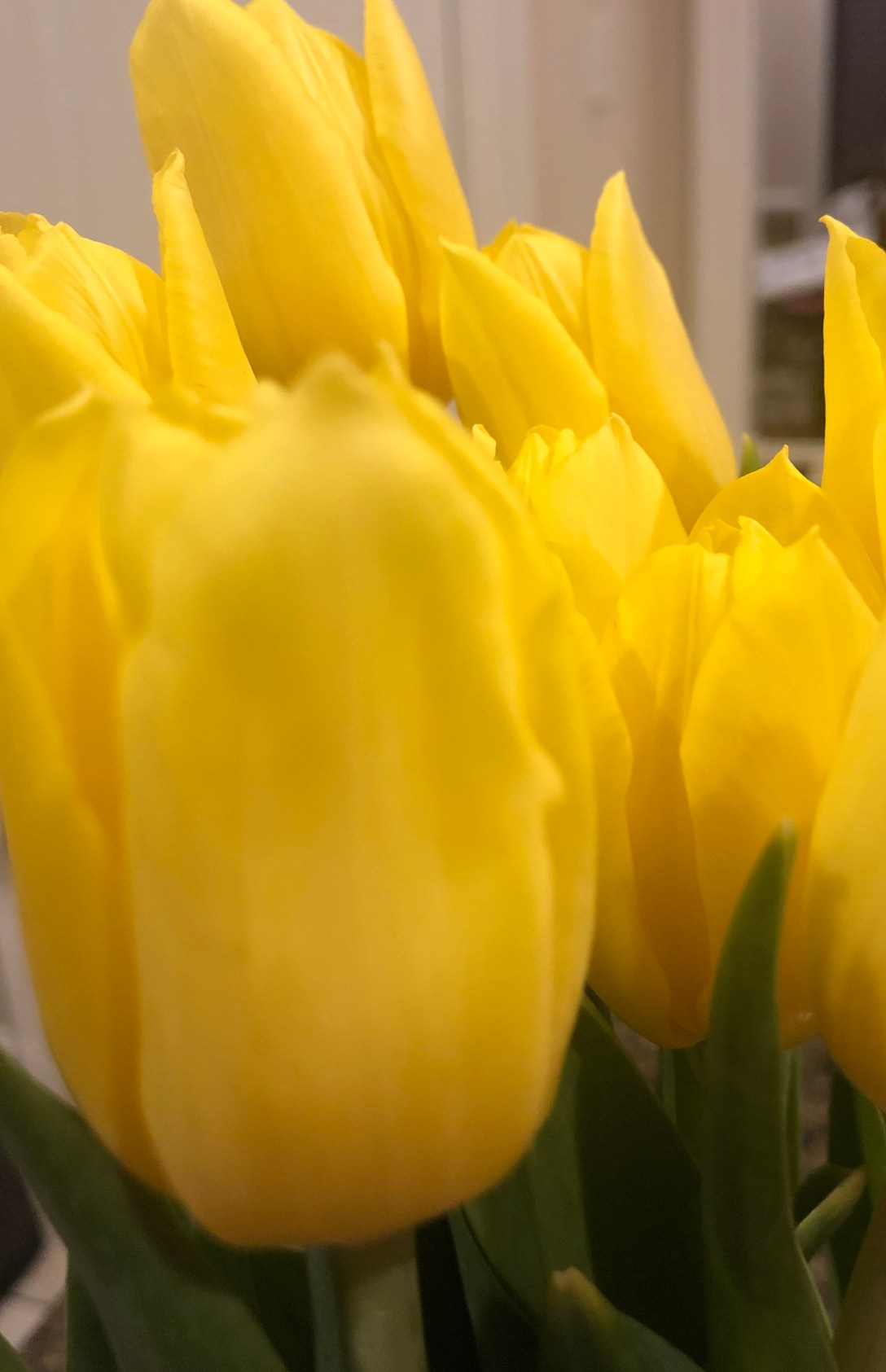
Today I bring you flowers and a poem. Tulips, above, and also, “Tulips” by A.E. Stallings.

Tomorrow, my students will consider both during notebook time. The tulips pictured above will be present to more fully illuminate the imagery that Stallings calls forth. Except, I want my students to witness more than wordplay and careful poetic craft this time. I want them to notice more than structure and form. I want them to do more than consider their personal impressions of these friendly flowers and to do more than write a few original lines in their presence.

All of these events will occur, but my purpose is larger than the classroom. This intentionality isn’t new for me. The kids have come to expect it.

My hope is for an epiphany that will walk out the door with them…something beyond reading and writing. Lofty? Sure. Impossible? Nope. I want to edge them closer to realizing how much more brilliant the world becomes when we pause to consider not only the words in a poem (though that helps), but also the simplicity of the the beauty that surrounds us everyday. I want them to employ their curiosity as a citizen of a world that is full of natural and created enchantments…to remember what it is like to be struck with wonder in the presence of such gifts.

I kind of think we could all use a little more of that in our lives which is why my phone contains a profusion of pictures of beautiful skies.

JFkd8ydXQyu3x7+PfOquOA

I am pretty sure my obsession with the sunset and cloud formations and rainbows and any other gift the sky chooses to bestow has exhausted my family (well, except for my youngest who has joined me in this endeavor). I am not deterred. The moments where I pause and take in this bit of grace extended to anyone willing to look up are moments of pure serenity; they are moments of poetry. And in these moments, there is an exchange that takes place that I am not sure how to put words to–a sort of gratitude, of silent adoration. Accepting this unearned gift, appreciating it, is so far removed from the cliched flowers we have all been instructed to stop and smell.

Look, the world is a busy place and we are killing ourselves to keep up, to do more, to be more. Don’t discount the fact that teenagers feel the same way. It is easy to lose ourselves in the rush; it is easy to lose our balance and our way. Stopping to see the world, to be of the world is grounding and at the same time allows us to transcend the drama of the day, the stress of the season. It is a reminder of all that we were created to be and to become…and sometimes that looks different than the life we are so furiously forming.

So tomorrow, we will pause and take in these beauties; we will enjoy A.E. Stallings’ poetry (always a gift); we will create in response. And maybe, they will walk out ready to do it all over again…on their own, for themselves.

(Day 3 “positivity project”)

frivolity’s function

“Hey Mrs. Clark! We have a question for you!”

It was the very beginning of class. I smiled. I have taught these kids for nearly three years now and I had the sneaking suspicion that this question would have nothing to do with the text we had been working with. But I also knew that it would probably evoke a good bit of laughter…which is always welcome. School days are too long to reject or deny a break from the monotony of routine.

So what was this question that they were so anxious to ask?

“Okay, we’ve been debating this all day and we need more input. Are you ready?”

One can never be ready in these moments.

“Is a pop-tart actually a form of ravioli?”

Just a little bit of background. This is my AP Literature class. Seniors…who will populate some of the best universities in this country next year. Their schedules are intense because college admissions is intense. Their days are full of AP and honors courses; their evenings are full of homework, part time jobs, extra-curriculars and other responsibilities. And still this hotly debated topic was the one thing they couldn’t wait to share. (And also, don’t lie–you know you are having this argument in your own head right now…for the record, I said no…pastry not pasta was my criterion…we are still arguing…).

It would’ve been easy to be frustrated in this moment of distraction from our purpose. It would have been simple to shut down the question and admonish the frivolity…to drone on about wasted class time and how much we have to do. I could have been offended or self-conscious that our coursework wasn’t entertaining enough. I could have assumed that my agenda was more important.

Except, these kids are the reason I am in that room…they are the reason I teach. Their personalities lend levity and dimension to my days. Moments like this fill my classroom with joy and delight and wonder. Allowing an off-topic debate such as this humanizes my role as the teacher (and principal) and proves that I respect my students for who they are, where they are in this life.

I spend the hours prior to this class sifting through administrative duties…tasks I never imagined would be my responsibility because, honestly, I never wanted to be a principal. Not ever. This particular school and its particular quirkiness drove me to the madness of applying for the position. I couldn’t stand the thought of some new person, an intruder of sorts (dramatic, I know, but also true), coming in and potentially changing the heart of this place. So here I am. Answering a gazillion emails, filling out paperwork, creating and enforcing rules, moving in and out of endless meetings. It is exhausting. These kids make every bit of it worth it.

Every

single

day.

So yes, I entertain debates of this nature (you should know that “Is a hot dog a sandwich or a taco?” came up as well…). Because when it comes down to it, we will always make time for reading and writing…there will still be conversations about literary analysis and how to write a good beginning rather than an intro that reflects some geometrical shape…we will always make time to read the poetry that moves our souls…there will still be writers notebooks to create space for wordplay. But none of this work succeeds–none of it means anything to them–if I don’t also make space for allowing my kids to express themselves, if I don’t care about hearing their voices.

We didn’t spend a ton of time in this debate (which, by the way, their arguments were impressively substantiated). But everyday since, I have found myself smiling at the nonsense of it. I have found myself grateful for my kids and for this job that gives me access to moments like this. I have found myself thinking that anyone who doesn’t have the privilege of teaching for a living is missing out. I have found myself grateful that I work in a place that understands that kids (and teachers) just need to be who they are.

Even and especially when that means we pause for a moment and indulge in a bit of silliness.

(Positivity Project day 2)


inhale, exhale

Breath.

Invisible (well, for now anyway, it is still September and still, it seems, endlessly summer).

Invisible except in the rise and fall of the chest; except in the fatigued surrender of a sigh.

Invisible (for the healthy and the privileged) because it is easily ignored…a state of being, an elemental piece of existence. Mundane. Prosaic. A promise fulfilled that has become a promise expected and so the gratitude that might create awareness…

Dwindles.                   Subsides.                  Withers.

Invisible until we are gasping or labored or until the air around us runs rancid and it becomes hard to find clean air to fill us up to propel us forward to allow life

to swirl,                      to swell,                    to scintillate.

(metaphorical? yes–and–no)

Invisible until we are breathless and then it is all we see, all we feel–the ache, the burn resounds as our breath seems to have abandoned us and our quality of life (its abundance and intensity and brilliance) seems to have shifted and that shift, even if minuscule, stings.

~~~~~~~~~~

Breathless: I have been feeling breathless. I have unwittingly been attempting to fill my lungs with the air of stress that has become polluted by fumes of negativity and the entirety of my being has suffered as a result. I am exhausted, heavy, impatient. While exhaustion comes with parenting and “principalling” and teaching…heaviness and impatience are not familiar territory…and they frustrate me, creating even thinner air…leaving me jealous for any life, any day, any moment removed from the needs of others and the anxiety of not meeting them as effectively as I would like. I don’t consider myself a perfectionist (I am far too disorganized for that), but I don’t like letting people down either.

Triage: I needed to stop. To step back. To assess. What was missing? Why couldn’t I catch my breath and extract myself from this quicksand of worry? Why couldn’t I take back the narrative of positivity and rewrite the negativity…spin a new story? (I am, after all, the most annoyingly optimistic person I’ve ever known…ask my students, they will tell you) Why couldn’t I see a glimmer in this wilderness that seemed to be closing in around me?

Diagnosis: Writing. I wasn’t writing. (I mean, there was the lack of exercise too, but, you know…) I wasn’t granting myself permission to do one of the few things that make me feel most myself. I was using the time excuse again. But, seriously, chasing time was part of the reason I was so breathless and I wasn’t getting any closer to catching him. The rock was at the bottom of the hill again everyday and my Sisyphean struggle only seemed to intensify. So, I had to make a determination. I needed to challenge myself. I needed to fight my way out and that fight was going to have to include putting words on the page (digital or otherwise).

Prescribed: “the positivity project” (which I am sure is not some new brand of ingenuity–rather a remake) became my road map. Writing on this blog, 30 minutes a day, everyday, for as long as I can make myself, with the purpose of promoting positivity in each entry. It just seems that if I needed to be dug out of negativity, other people might benefit from reading something positive as well.

And maybe this way I will move forward in greater gratitude for the freedom of clean, easy air. A plentitude of it. Instead of searching for breath, I will just

Breathe.

For poetry’s sake

So, I had this dream last night…hang in there with me…it is a little fuzzy as remembered dreams tend to be. I was seated at some event with some of my favorite authors (I can’t recall who precisely; I didn’t really see them, I just knew they were there). We were in conversation and it was as though I belonged there…as though I was an equal. Then, suddenly the person seated just a few chairs down from me turns and shares details about a poetry anthology that is about to be released.

It was Maya Angelou.

In my dream, this person speaking directly to me, was Maya Angelou. I immediately, without intimidation or reticence and as though I were speaking to a friend, replied with enthusiasm for this text and began my sad story about how I have all these things to say about poetry and no voice or platform to share them more effectively. And this is where I know my sub-conscious was really trying to nudge me…Ms. Angelou looks me directly in the eyes and says, “You have a voice. You are just choosing to put other things first. Free your heart, the words will follow. Give them the time they deserve.”  I’m certain if this had truly been Maya Angelou, she would have expressed this far more profoundly, however, she was limited by the confines of my sleepy brain. Regardless, this truth-baring reprimand was enough to get me writing again…and the words below are my heart set free (well, when it comes to poetry anyway…especially the necessity of poetry in the lives of our students…).

What feels like a million years ago now when I was still young and smart, I spent my last two years of undergrad researching and composing my honors thesis on Dante’s Divine Comedy. This project was a passion of mine–I began taking Italian so I could read the poem in the original language…I read Inferno, Purgatorio and Paradiso each more than once…I read texts that inspired the allusions within Dante’s work…I read criticism…I wrote about all of this and then wrote some more and some more after that. It fueled my brain and felt like the most intriguing puzzle ever set before me.

When I finally narrowed my focus, I was surprised that I landed in the beauty of Paradiso rather than the glorious and righteously (and maybe vindictively) bestowed agony of Inferno. I never saw that coming, the Inferno always seemed far more deliciously awful and enjoyable. But somewhere along the way I discovered a pattern in one of the cantos of the Paradiso and my brain said, “Yes, thank you! We will park ourselves here and think some more.”

Honestly, as nerdy as this will sound, working through this text and the sometimes terror…sometimes frustration…sometimes exuberance of writing about it and about my findings was legitimately fun and some of the most gratifying work I have done in my life.

With all of that in mind…I bring you to the day of my defense. One of my favorite humanities/comparative lit professors had offered to be one of my readers, and I honestly couldn’t wait to hear the praise and accolades he would lavish. And while there was some of that, there was also something else…something that in all these 20 or so years, I have never forgotten. With a look of true disappointment, he revealed that while my academic work was excellent and my dissection of the poem important, I had lost the beauty of the words along the way…that I had completely sacrificed the magnificence of the aesthetic created by the poet in order to deconstruct the work for deeper understanding. I mean, look, my defenses went way up because the aesthetic wasn’t my focus or my purpose. But the fact that the sting of that statement still lingers, points me toward the fact that there was enough truth in what he observed that he was right.

Which brings me to the point of this first blog in a new series of blogs (well, I’m hoping it becomes a series of blogs anyway!). I’ve been advocating for years that the reason students (high school students especially) need to be studying poetry in the classroom is because it will impact them as writers in deep and meaningful ways. I know this to be true and so do so many other teachers I admire. Poetry, in its brevity and precision, offers a microcosm of what happens in prose–each word, each piece of punctuation, a deliberate and intentional act on the page–each poem, approachable for study even when it will take work to navigate because the page isn’t so overwhelmingly full.

This (in greater detail) has been my plea for the last 5 years:

Teach the poetry and your young writers will better their craft.

Something in this poetic passion project always felt hollow, false, lacking. I could never put my finger on it until the other day when I woke up from my Maya Angelou dream a little unnerved and suddenly thinking about my thesis defense. And then a more complete truth settled upon me.

In all of my research and in all of my speaking and writing on this subject, I have been too focused on the academic outcome and less focused on the human need for and the value of the aesthetic, of the emotion, of the truths contained in the beauty (albeit sometimes raw rather than rapturous) of poetry…the value of students finding themselves in a poem, finding comfort, finding joy…the value of students finding the truths of others in these brief texts…the value of the outlet of poetic composition when a student is anxious, overwhelmed, in crisis, happy, in love (and yep, teenage love counts you guys–perception is reality, so guess what…that perceived love is their reality)…

In all of my efforts to feel and sound credible, I lost sight of sharing the importance of the empathic weight of poetry and what that delivers to the human beings in our classrooms, seated before us. I ignored the truth that sometimes what we read–especially poetry–doesn’t have to be an academic pursuit, rather it can be a soulful one, a healing one, a rejuvenating one, an exploratory one–one that isn’t followed by analysis and essay, rather causes us to look carefully inward. And just because we have demands placed on us as teachers that sometimes restrict what it is that we do in our classrooms and how we do it, does not mean we cannot make the space for poetry and for allowing our students to be human beings rather than simply learning machines…for allowing them to be frail and vulnerable and to interact with a text that will foster connection and allow them to feel seen, heard, understood…for granting them time to appreciate the beauty of the words and not have to peel back layers in search of some purified explication. After all, if we are truly teaching the whole child and respecting them as individuals who deserve to be seen, doesn’t all of this fit…doesn’t all of this become required curriculum?

In the coming days and weeks, this blog will be filled with stories and moments and ideas that validate the use of poetry in the high school classroom (okay, and really in all of our lives…just saying…) and not for any other purpose than allowing our kids to feel and to wade into and to soak up the beauty of the language, its function, its artistry, its ability–for in allowing them to do that, we will empower them to harness their own emotion, to develop their own voice, to know who they are and to speak their own truths. In a world where the college admissions process has become debilitating and where our students often feel othered, unheard and ignored, how can we discount poetry when it can work against the injustices they feel and face?

Commencement

On the evening of Friday, May 17, my seniors graduated. Commencement is a pretty common event yet I always find myself inspired and moved as I watch another group of young people venture off toward their future. This year was a bit different as this was the first group to graduate since I became Head of High School and I was also asked to deliver a commencement address. Since Friday, several people have asked me to share my words from that night, so I figured this would be the easiest way to make that happen. Below are those words–certainly, they are more significant to my kiddos and in the moment that it was delivered. Regardless, here it is…

“I love graduation night at CES. Friends and family outside of this community struggle to really understand this about me. Last year, for example, I was too sick to attend graduation and in the depths of my disappointment over my absence, I turned where anyone else would for comfort…to social media. I just knew that if I were to share my heartache over missing this special event that at the very least my teacher friends from other schools in other places would get it…they would understand. Except, most didn’t. In fact, many of them congratulated me on getting out of attending the ceremony, saying things like “the kids won’t even know that you aren’t there” and “there will be another graduation next year, don’t worry” All I could say was “You just don’t get it.” And they didn’t. I didn’t try to explain that things here are different or unique. They wouldn’t have gotten the weight of that either because our “essence” as Zoe referred to it in her Seniors Speak is far too intangible to fill a pithy Facebook response and worth far more than any number of likes, loves, thumbs up it might receive. There wasn’t enough space to express that when these young people graduate after spending so much time with us in our small, quaint setting that they are not just students saying goodbye, rather they are family moving away from home—and graduation has become a sort of formalized celebration of that bond before they depart and look to the next exciting moments in their lives. When graduates cross this stage, it means something to each member of this faculty because we have an investment in the lives of each of these young people that is made richer because of the size of our school, for though our community may be small, its heartbeat is mighty. Every graduation counts here. Every kid matters. These young people seated before you and all who have graced this stage before them have taken up a residence in my heart and in the hearts of all on this campus and while they leave us physically, there they will remain.

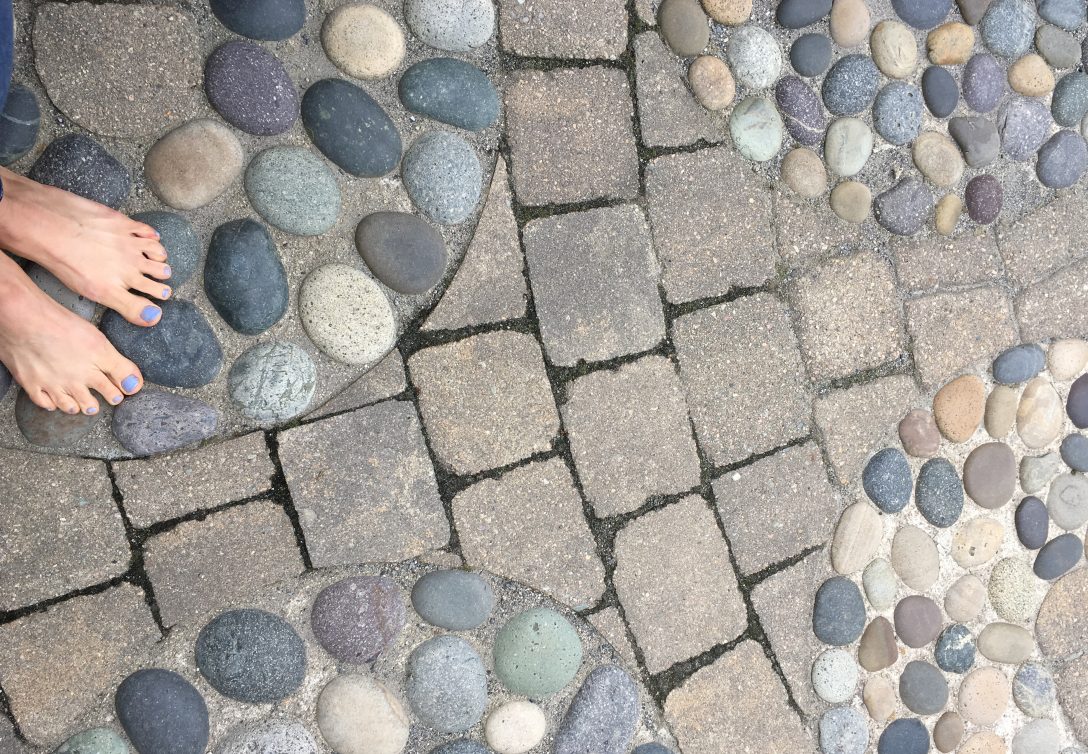
I consider it a great honor to have the opportunity to speak this evening as I stand in awe of this particular group of graduates. Mr. Morvant referenced them as “Living Stones” of CES the other night at our Academic Awards and while I’m sure his intent was for us to consider St. Peter, I couldn’t help but think of a line from the U2 song “Ordinary Love” —“the sea throws rocks together/But time leaves polished stones.”  While these lyrics stray from Mr. Morvant’s purpose, I also think they typify and exemplify so much about this class. To me, these lyrics consider the power of refinement an environment, even one that is tumultuous at times, can have. These lyrics also speak to the power of the company you keep in that environment—company that is not always your choice but because you share space you are being shaped by each other every single day in ways you may not even recognize—Yet, as a result of this closeness, there is  also a need to figure out how to respect the differences in those that surround you without losing what makes you the individual you are. After all, the rocks being tossed in the sea would become far less interesting if they were all polished to look identical.

So, if you don’t already know it, this is a group of strongly opinionated young people who had to work rather hard in order to learn how to share those convictions without insult or injury and how to hear opinions different from their own without judgement and clearly disgusted facial expressions. They had to learn how to have difficult conversations without it degrading into argument and vitriol. Honestly, the adults in this world have a great deal to learn from the process these kids have endured. When they believe in something, they are fiercely protective of it and that is commendable. That is how you end up with an Equality Club and a GSA; that is how you end up with a thriving golf team and a student council that fosters activities on par with schools 3 and 4 times our size; that is how you end up with costume design and a newly popular student vestry; that is how you end up with 17 young men and women some terrified, some exhilarated but all willing to stand up at Seniors Speak and share not just their learning, but their truth.

It is in fact a process of refinement. And I think part of what makes that refinement so difficult is the call to love. This greatest commandment, this call to love our neighbor is daunting because sometimes it is the people in closest proximity that can become the most difficult to love, the most difficult to forgive, the most difficult to really see because we feel we know them so well. But as we heard in the reading tonight, love “bears all things, hopes all things, endures all things. Love never ends” (1 Corinthians 13:7-8)

These polished stones seated on this stage tonight have learned together the weight of these words as they have trekked the journey of these four years in community. Their years here while often full of laughter and silliness, coordinated dress up days and themed get togethers, have not always been so simple and this call to love has gotten cloudy and complicated at times, as it does for all of us–yet despite the seemingly enigmatic challenges and the time it may have taken to unwind them, these young people have always abided, they have always found a way to rise above, they have always sought to work it out and I believe that they will continue to do so in their lives even now as they go their separate ways. They will bring that goodness and the understanding that the single story, what we think we know, is never, not even once, the entire story, they’ll bring that to new environments, to new people they have yet to meet because that foundation is strong—because they worked to build it. Because this is the sheen of their polish. And in doing that they will absolutely become “Living Stones” of Christ Episcopal School. They will carry forward the love that was fostered in them and by them and in doing so, I hope, I expect the world will be a better place for it.

As an aside, as our Salutatorian and I discussed speeches this week, she told me my speech would be great as long as I didn’t include any poetry, and I tried not to include any, I really did, but alas, here we are and I am definitely going to quote some poetryJBut it fits, I promise…

Elizabeth Alexander in her poem “Praise Song for the Day” writes the following words that I believe speak to this call to love perfectly and also to the call that I repeat more often than any of my students cares to hear that “words matter”

“We encounter each other in words, words

spiny or smooth, whispered or declaimed,

words to consider, reconsider…


What if the mightiest word is love?


Love beyond marital, filial, national,

love that casts a widening pool of light,

love with no need to pre-empt grievance.


In today’s sharp sparkle, this winter air,

any thing can be made, any sentence begun.

On the brink, on the brim, on the cusp,


praise song for walking forward in that light”

Each of these young people seated before you have faced at one time or another seemingly insurmountable odds, moments that have forced them to make decisions far beyond the wisdom of their years, moments that presented challenges they may not have felt equipped to face, moments that required courage they didn’t know they possessed, yet here they are tonight on this immense occasion, not simply having survived but having overcome. Having overcome it all together. They are here tonight ready to face what the world will offer them because that offering while sometimes brilliant and generous, will not always be pretty, will not always be kind, will not always be an extension of love. Yet, they will leave here tonight, I hope, with the knowledge and confidence that they have what it takes to meet with adversity, hardship, crisis and to tough it out until the polishing is complete and their sheen has returned only now with more sparkle. They leave here tonight, I hope, with the knowledge that their CES family is always here to shelter, to support, to celebrate, to sing their praises. When I look at this class that is what I see—I see strength, perseverance, and a willingness to melt the skeleton and reshape when necessary. A willingness to extend love and grace—and hopefully that love will cast “a widening pool of light.” You have all taught me so much about what it means to be a human in this world. And for that, I am so grateful to each of you. Your absence here as you move forward will be noticeable and you will most certainly be missed—and not because you ran clubs or helped set up chairs, not because you made good grades or won awards—you will be missed simply because of who you are, because you are a part of this school family.

Just don’t lose sight of the fact that as you greet every new and exciting moment that you have the opportunity to consider and reconsider your words, don’t lose sight that love is the mightiest of those words and that today –every day “any thing can be made, any sentence begun” You guys are walking forward into such bright futures with so much light, but don’t forget that “we all make choices” and that it is your job to bring light with you as well.

Your mark here is indelible, Congratulations Class of 2019. We are so proud of you.”


Light

Some days are armed with the power of transformation–arriving as ordinary as any other yet abounding with redemptive reminders that distract our gaze from its habitual focus. Some days extinguish the anguish of negativity, doubt, and worry that heavy the burden we shoulder and we walk into a new day renewed.

It has been a difficult few months and my boots have become weighty. I trudge from day to day (with a smile across my face, regardless)  knowing that this sensation, this looming shadow is ephemeral in nature. It is not the end. There will be more. There will be goodness. There is still love. But sometimes, it can be hard to keep my eyes above the waves. Sometimes, it feels easier just to give in to the shadow, to shroud the possibilities of positivity in the obscurity and confusion of doubt.

Today, though, there was a moment that changed all of that. Today was quite possibly the most perfect Jazz Fest day one could experience–the weather, as friendly and laid back as the people, welcomed us serenely as we strolled from stage to stage and from food stand to food stand. It was living into this day, however, rather than simply letting it happen to me that has reformed my vision, my heart, my head. Tonight, I am new. I am ready. I am grateful. Tomorrow will be met with fresh perspective.

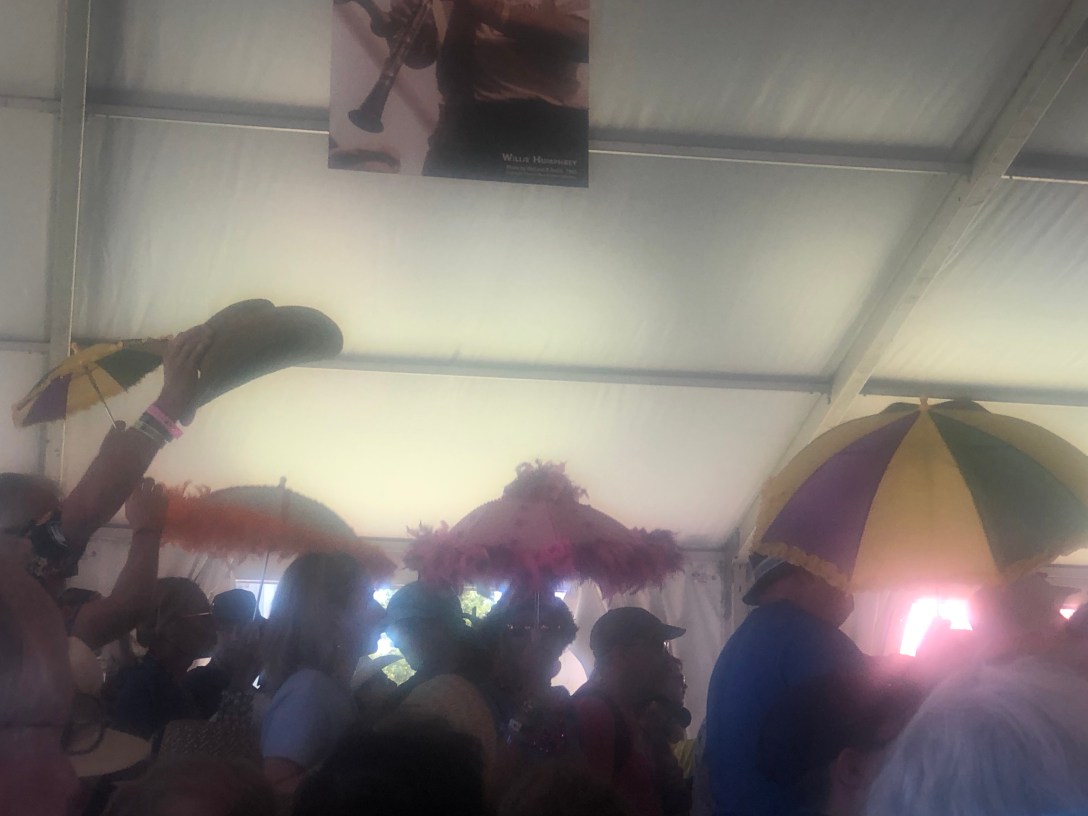
This shift ignited with a moment I’ve witnessed countless times in my Jazz Fest experience…the moment when the Economy Hall Jazz tent erupts from seated passivity into the undulating zeal of a Second Line. They marched; they strutted; they sashayed; they paraded; they danced. Some with eyes closed, others with eyes wide; there were smiles stretched wide, yet some others with brows furrowed as music overwhelmed their being; some with open hands waving high, others clasping an umbrella or napkin or hat for flair. I’ve come to expect this scene–honestly, if it wasn’t there, it wouldn’t feel like Jazz Fest at all. Yet today, somehow it appeared differently to me.

Today, the people became the poem—each moving individual a unique line in a much larger piece, creating, contributing to the rhythm of the whole, breathing life into its body. Each moving individual providing some sort of punctuation to guide the reading–a full stop in mid motion for one, a quick pause for another and some, whose fluid movements never ceased, overflowed their line and rolled right to the next. Enjambment made physical. Yet, all together, they composed a singular poem…proverbial poetry in motion…and it was stunning.

As I watched this diverse group parade, I considered that on any given day these people would have absolutely no reason to stand next to each other let alone dance together. These people were so visibly varied that they might not have much in common (or at least they might assume so–we tend to lose sight of the commonality of humanity in the face of obvious differences), they might not agree or see eye to eye. They might argue. They might even fear what they don’t fully understand about each other and never strike up a conversation at all. They might come to dislike each other. They might never have danced with each other.

Sometimes words just complicate a simple existence, you know? We feel they are steering us toward truth when in fact they are simply rearranging facts to make us feel more comfortable with the “truths” we create. We feel we are using them wisely when in fact we might be using them divisively instead. We fail to employ them to build others up because it is simpler to destroy. We fail to ask questions and instead assert assumptions.

Today, in the presence of music, words weren’t necessary and the people moved with unity–uniquely dancing their own Second Line but doing so together…respecting differences, even admiring them and thriving as a result. Today, I saw what the world can be when we tear down language of “them” and “us” and instead, embrace the dialogue of “we” and “us”. Today, I saw a vision of the beauty that arises when we simply let those around us be themselves without judgement because we are too busy being ourselves to find fault. Today, I saw the possibility of living together harmoniously in a world that seems to fight with fervor against such a dream. Today, I saw hope and it overwhelmed my heart.

A single moment taken in, considered. Renewal granted. Replenishment.

Light in the darkness exists, if we simply take the time to seek it out.