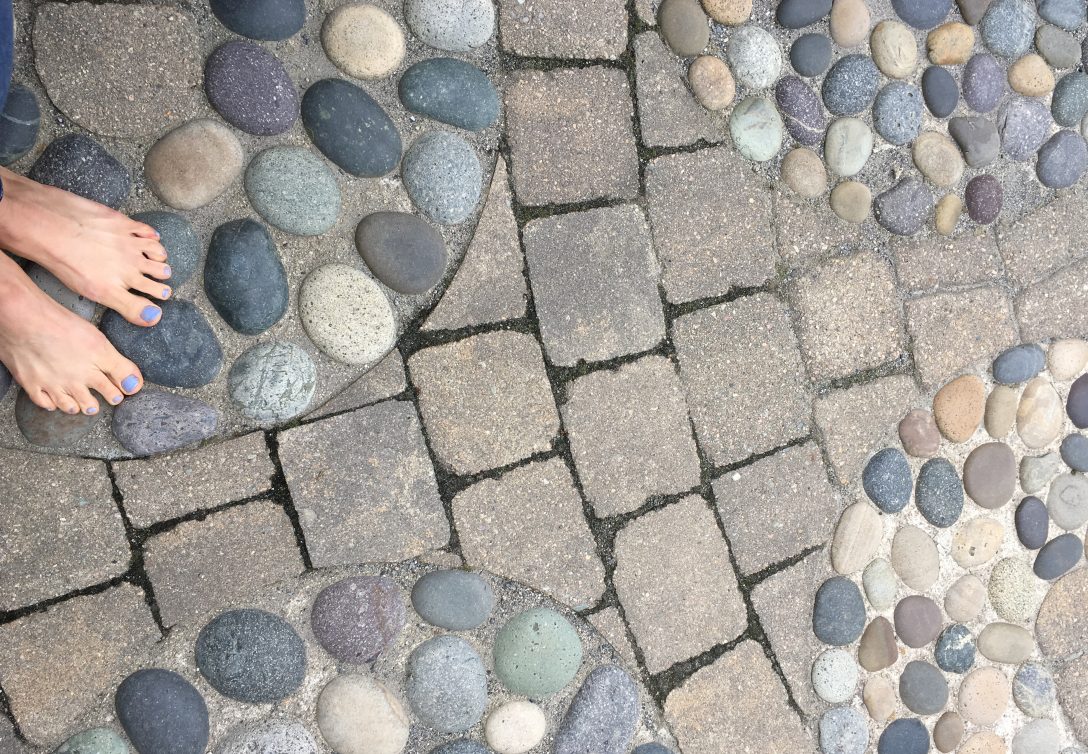
Hope

Someone asked me just before the New Year announced its arrival with colorful displays and cacophonous litanies, what word I would choose as sort of a mantra for the year. I had to pause (it felt like a rather weighty decision after all, I should be thoughtful).

I considered the previous year, 2018. This was a year that tested me in ways I’ve never been tested. My health decided to forsake me and as desperately as I tried to swim up through the mayhem of new and damaging symptoms, I only seemed to sink deeper. I was committed to not giving up my life and livelihood even though its quality had been diminished. I fought fiercely to put on a smile and to tell people not to worry because I was fine when that was the farthest thing from the truth. I made jokes. I taught my students. I cooked meals. I attended soccer games and plays where my own kids were competing and performing.

Well, a shadow of me did anyway.

I realized this Christmas that other than remembering how distinctly terrible I felt and the anxiety that swallowed me up as a result, last Christmas was a vast black hole. Because you see, while every picture reveals a woman smiling and being active and grateful for her life and those in it, every picture also hid what was happening on the inside.

On any typical day, I am without fail annoyingly optimistic. I own this trait–and while it can be less than realistic at times, it is also the only way I care to look at this world and my place in it. But in the days between November 2017 and June 2018, not only did my optimism fade, but so did my hope that I would ever be well or whole again…that I would ever hear normally, that I would ever have a non-dizzy day. And as my hope withered slowly, so did my spirit. And as my spirit dwindled I no longer recognized the person I had become and quite honestly, this terrified me.

And then, as though a gift from above, I was offered and received the surgery that fixed most of the physical issues with my inner ear. It was overwhelmingly successful–I couldn’t have ever imagined I would feel this good again and while incredibly grateful, at some point I realized that even though my body was seemingly “cured” (even if only temporarily), I wasn’t healed. There was damage that no surgery could repair. The rebuilding of my trust and my hope and my optimism was going to take time–it was going to take effort…so. much. effort.

I began to think of Emily Dickinson and how she described hope–

“‘Hope’ is the thing with feathers-

That perches in the soul –

And sings the tune without the words –

And never stops – at all -”

So I knew hope had to be there…maybe I hadn’t listened carefully enough in the furious “Gale” of those sick days to hear it singing (or maybe I was simply too tired to make the effort to try). But that’s the thing about hope–I don’t doubt that it was always waiting for me to seize it up enthusiastically and allow it to carry me forward. I don’t doubt the power of its force and I don’t doubt that it is there for every single human in this world who seeks it out despite hardship–hope is certainly not biased in who gets to partake. I also don’t doubt that hope, as powerful as it is, lacks the ability to swoop up an unwilling passenger–hope is not for the bystanders, it is an active state of being.

I lost hope because I grew too weary to fight harder to seek and to maintain and to nurture and to treasure it. I lost hope because I thought hope had forsaken me–I removed myself from the equation and I was too blind to even realize my role in this. And once I felt betrayed, once I felt abandoned by hope, all I could feel was sorry for myself. And this was new territory. It took me realizing that I needed to seek hope out for it to sing loudly enough for me to hear.

So, in my pausing to consider what word should define my new year, it was hope that reverberated in my mind and in my heart. This is a world that commands hope for survival. Even when you are not sick, sometimes the world seems to be. It can feel easier to give in to the pessimism, to the rancor, to the weight than to fight to see the goodness humanity still possesses and creates. But it is our job to see that light in others and in the world, to amplify the good, to sing the song of hope so loudly that everyone else cannot help but listen to its melody (and hopefully hum along). And for this year, and beyond, Hope (seeking it, singing it, living into it) is my word, my guide, my path back to myself and who I truly wish to be.

(This podcast is a really great listen for everyone but especially if you are suffering without cure in sight but might benefit from understanding the difference between being “fixed” and being “healed”. It has been an integral part of my understanding on this journey.)

Day 2 of Carnival Season writing challenge complete!


A ticket for my destination

“I was in crazy motion

till you calmed me down…”

(“Something So Right”, Paul Simon)

To the observant eye, Jazz Fest 2006 was a composition of strange juxtapositions. The pain of loss was fresh—surreal but powerful, pervasive. But, the city, nurtured and healed by its heart and enduring community, was reaching for recovery. Jazz Fest activities offered reprieve and felt almost normal, as though for a moment you might forget. But even amid that semblance of normalcy there was a constant haunting reminder that outside the gates of the Fair Grounds lie the lingering stench of floodwaters that sat for too long, houses (lives) left in shambles (unrecognizable), an emptiness left by those displaced or worse. There weren’t bookmarkers to measure this loss.

Inside the gates, however, was something else entirely–a vivid display of all that we are and have been; a brilliant indication that we would in fact be okay, we would rise again. The food, the music and the community of people joyously gathered together in spite of it all worked to heal something inside of me that day. Something I wasn’t so sure could be healed.

I went to that particular day of Jazz Fest as a bit of an unwilling participant. In addition to the devastation the storm brought to my family, in the months leading up to the storm, my husband and I had lost our son midway through the pregnancy and another baby to miscarriage. My body, my spirit was battered and seemed to understand a depth of loss that my empathic nature could never have predicted. It seemed permanent damage. And maybe on some level it has been.

Except not entirely.

I went to Jazz Fest that day for one reason only: Paul Simon. I was in a funk. I was sad…for myself, for my city, for my parents…and I just wanted some do-overs.  Paul Simon’s music does something to me that I don’t have proper words to explain. His lyrics are poetry in a way that not all lyrics can hope to become. His awareness of words, his attention to how they work together, to how the sounds of the letters and their repetition create a rhythm just as the music does, how his words create a moment for the listener–first inviting you in, then residing in your heart, in your mind. That is what poetry does…that is what Paul Simon’s work has done for me…storied my life, guided me through.

As I stood in that field, Paul Simon, playing songs we had all heard before, somehow uplifted the city of New Orleans, and I was delivered to a sort of rebirth…a baptism if you will, but not by water (there had been enough of that). It was music that brought healing and comfort that day and carried me from the funk to the other side…to a place where I could see the possibility of goodness again. I stood in that field not knowing if I would ever have children, but knowing that my spirit was healing and that no matter what, I would be okay.

“My life is made of patterns
That can scarcely be controlled.”

(“Patterns”, Paul Simon)

Thirteen years later, I find myself in the midst of a new sort of recovery, facing the hope of yet another rebirth.

I spent so many months of the last year disabled by hearing loss and vertigo…and after becoming resigned to the fact that my hearing could be permanently damaged but I might still potentially hear the movement of my eyes forever (I promise, the novelty of this idea is deceiving)…after spending months trying to memorize the sound of my children’s laughter rather than be annoyed by the noise of it and carefully studying voices of loved ones before I no longer heard them as I should…after learning not to trust my body or my balance and after fearing loss of so much, I have come to find my body healed (at least for now) by a surgery that seemed unfathomable for so long.

Yet, while my inner ear is currently in a more cooperative mood, my mind and spirit are still trying to catch up. On any given day, at any given moment, I find myself suddenly stricken with absolute panic over the possibility of symptoms returning despite the fact that, everyday, my life is a little closer to normal. Or, I find myself unexpectedly emotional at the weirdest times when gratitude for health and healing overwhelms me. I’ve learned what it means to be a fighter over time, and while I am weary of having to continually prove my brawn, I furiously battle on through the weight of this anxiety and these grateful tears.

In the midst of all of the unknowns of this illness though, tickets went on sale for Paul Simon’s New Orleans show of his farewell tour.  We bought floor tickets without thinking too much about it. I had no idea if I would be able to stand in a crowd or stand at all…I had no idea if I would be able to hear well enough to enjoy the show…I had no idea if I would be too sick to attend. All I knew was that if Paul Simon was coming to New Orleans, I had to be there.

Buying those tickets was a leap of faith.

Recovery has not been an easy road, but my beacon all the way through was knowing that in just a few short weeks, I would be in the New Orleans Arena vertigo free, with my hearing restored and once again having my soul replenished by the beauty and richness of Paul Simon’s lyrics and music.

As I sit here tonight typing these words (the night before the concert), a tropical storm looms in the Gulf (I promise, this English teacher has assigned more meaning there than should be).  A bit of a reminder for me that storms will come–they might flood, they might destroy, they might bring uncertainty and fear and it might be hard to see in the midst of them or to know when it will subside, but there is another side.

There is always another side.

Tomorrow night, when I walk into that arena, I will be stepping not just into a shelter from the storm, not just into a brief respite, but I will be stepping toward the consolation that will be my reward.

Poetry is a human thing

So, it’s been a while since I’ve written. There’s no real explaining it other than to say that this poem reveals a bit of where my frame of mind and heart have been…“mydreams, my works, must wait till after hell” (Gwendolyn Brooks)

I’ve been sick. Not in any terribly dire way—just in a terribly disruptive way. My inner ear has been unusually and relentlessly unfriendly for the last few months bringing about frequent periods of hearing loss, imbalance, and vertigo. These symptoms have haunted my days and stalked my spirit, even when not present, for the last five years. They weaponize themselves further with feelings of anxiety, fear, helplessness, and most recently, because of their refusal to retreat, hopelessness. It was difficult to see the rather hopeless path I was walking as my mind was foggy and focused on simply making it through each day. It wasn’t until I was granted a few days of feeling well recently that I looked around to realize I had arrived some place unfamiliar to my bright, optimistic, unconquerable spirit. I couldn’t see my way out and to be honest, I wasn’t sure I had the energy to try.

But I knew what was missing—I wasn’t reading poetry…I wasn’t writing…I wasn’t myself. And that had to change. The trouble was that without realizing it, as Brooks writes, I had stored “…my honey and…my bread/In little jars and cabinets of my will.” And apparently, I had placed them on the top shelf, out of reach. They were too important, too critical, too central to my being and I refused to tarnish them with the ashes from which I hadn’t found the strength to take flight.

I would wait.

And then I realized the veracity of Brooks’ 5th line. Two short sentences, one line of poetry; a line divided into simplicity, while burdened by the weight of truth—my truth. “I am very hungry. I am incomplete.”

Poetry and writing are part of my being. Without them, I’m hardly whole and without them I find it hard to breathe and impossible to move. Sure, I was still physically getting through my days and I was smiling through as many of them as possible, but my spirit—the intangibility that ignites the fire within my heart, eyes, thoughts—was starving, weak and waning.

Returning wasn’t easy—I had to make myself do it (and as you can see by this not so uplifting piece, I had to work through some stuff as I did). But, the more I read, the more I write, the more alive I begin to feel and suddenly health and hope seem possible again. I’d be lying if I said I felt fully invigorated because I read some poems and sat down to write, but I’m on my way—I’m on a better path and my jars of bread and honey are getting easier to reach and open.

I shared Brooks’ poem with students last week as we were opening a study on the impact of justice (or the lack thereof) in our world and on the individual. It’s always tricky sharing poems I’m so personally attached to with kids. Inevitably, those are the poems that evoke initial student responses of “this is ridiculous” or “this is why I don’t like poetry” or my personal favorite, “the poet is wrong” (though this does bring up conversations of empathy and questions of when do we have the right to deny the feelings of others—and it also brings up the opportunity to discover what can happen when a poem is read multiple times so that its words are no longer being decoded and its ideas and truth become present and palpable). But this piece felt important to our work because it reveals that justice isn’t something that exists solely in the courthouse and with lawmakers. So, I brought it to my kids. I wanted them to connect with the poem, to dig in and understand it, to feel its worth and weight. In order for that to occur, they had to be free to respond honestly, in their own way, and in a safe space, one that was theirs and theirs alone—their writer’s notebooks.

After I read it aloud and they reread, reflected, and wrote (or drew), we talked—well, they talked and I listened. They got it. They knew this moment of storing honey and bread. They had been or are currently incomplete and hungry. My kids, while they seem to have plenty, know significant loss; they know depression and anxiety; they know isolation. They felt as one with the poet—a solidarity of sorts. Many were amazed to know they weren’t the only ones who had felt this way and not only that but that a famous poet had felt it deeply enough to write it down.

They recognized that injustice doesn’t have to be as far sweeping and giant as racial inequity or police brutality or child poverty. They recognized that sometimes even their lives could feel unjust. They recognized that they weren’t alone—that this was a human thing. But mostly, they connected to what personal injustice had felt like and in doing so, doors were opened to be able to begin a discussion of systemic injustice with fewer barriers—because we are all human and injustice is a weight, a burden—one that maybe cannot be overcome alone. In connecting to an issue before putting up the barriers of having to be right, it is often more possible to understand it more fully. We were ready to begin.

This is why poetry is essential. It reminds us ever so gently that we are all humans—no matter what, we are all humans—and with that comes a common bond and a responsibility to sometimes reach the jars and loosen the tops and stand side by side until the “devil days of…hurt” are no more.

(just as an aside—we also read and discussed this poem as we moved through these early parts of our study on justice– “Kindness” [Naomi Shihab Nye])

Reparations

Today, October 15, is pregnancy and infant loss Remembrance Day, so instead of my usual classroom focused post, today’s blog is far more personal and one I haven’t really shared so publicly. But, today, it felt right. Read at your own risk. It’s pretty emotional.

“ —Even losing you (the joking voice, a gesture

I love) I shan’t have lied. It’s evident

the art of losing’s not too hard to master

though it may look like (Write it!) like disaster.”[1]

**********

Losing things would seem to be a fault, yet it has always been one of my greatest talents. Quite honestly, it is an art I’ve perfected.

I can still see my six-year-old self pouting and tearful over a lost doll. I knew that once my indiscretion became public I would suffer the disappointment of my mom, the frustration of my dad (that doll had cost money, you know), and the derision of my brother. There was only one thing to do, only one place to turn. I turned my downtrodden gaze upward and sent a desperate prayerful plea to St. Christopher (and probably to my guardian angel too…) to help me find her.

I’m not entirely certain if I ever did find this particular doll; however, this moment sticks out in my mind because it was the first of many prayers for the loss in my life.

The trauma of lost dolls soon evolved into the struggle to find car keys (in the refrigerator? Really?) and credit cards. I became quite good at coping with these losses: stay calm, retrace your steps, pray for guidance, retrace your steps again, ask for help, and eventually find (or replace) what has been lost.

And so my life went for the first 28 years or so. Loss couldn’t touch me, couldn’t shake me—I was good at it. In my 28th year, however, it would seem being good at it wouldn’t be enough. Loss took on new meaning and with that so did my life.

**********

Nathan died before he was born. He died before there was a nursery, before baby showers, swaddling blankets, and pacifiers; however, he also died before suffering the pain his earthly life promised with absolute certainty. This is a pain that, as his mother, I bear for him every moment of my every day, and I do so with gratitude.

The brief flicker of this sweet little life has forever altered mine; for while I delivered Nathan into a world he’d never meet, he and I shared 17 weeks together. Those weeks were filled with intensities of joy, nausea, first movements and hopes of the life we were to have as a family. Those hopes, a fulfillment of a year of frustratingly futile efforts, were real the moment the test finally flashed “PREGNANT” and I never once questioned that he might leave too soon.

**********

“Ma’am, I promise, these symptoms are normal in early pregnancy. Just calm down and take comfort in the fact that things are going so well!”

**********

Mother’s intuition comes more naturally than expected, well, at least it did for me. The refrain of reassurances issued from my well-meaning nurses never proved satisfactory. Somewhere, and maybe only in my heart, I knew that something was terribly wrong. Still, I proceeded naively with confidence.

**********

“Oh dear, that is fluid around the brain! Where’s your doctor? Out of town? We need a doctor immediately.” And with that, the sonographer darted out of the room.

**********

It was the day before Thanksgiving and in a fleeting moment, there we were being worked into a perinatologist’s already full schedule. Suddenly my intuition seemed to be correct after all, only it didn’t feel so good to be right. I felt sick.

This particular doctor, though brilliant, was ambivalent and unwilling to offer diagnosis until Nathan showed further development, which meant four weeks of waiting and wondering. We knew something was wrong but treaded around admitting it out loud.

I spent that Thanksgiving keenly aware that our poor baby would probably never have a “normal” life. I ached with jealousy for those around me with healthy pregnancies and babies. New feelings of loss, of being cheated as well as the anger over that loss replaced those early emotions of euphoric joy and hope: Fulfillment replaced with vacancy.

I struggled in this way for several days, when suddenly in all of my blind self pity, a moment of clarity shed the scales from my eyes to reveal the truth about the love a parent feels for a child.

**********

stay calm, retrace your steps, pray for guidance, retrace your steps again, ask for help, and eventually find (or replace)what has been lost

**********

I was standing in the kitchen, opening the refrigerator door when I understood for the first time that God grants gifts of many kinds and that it wasn’t up to me in what kind of package that gift might arrive. I knew in this flash of honesty that no matter what ailment our child might suffer, no matter what affliction might complicate his circumstances, I loved him completely, unconditionally and that love would translate into meeting his each and every need with devotion and unspeakable emotion. I found my child again and in doing so I found out something pretty important about strength and about parenting as well.

I gathered and rebuilt myself around this new found gratitude and love.

**********

“So, Mrs. Clark, do you have any questions for me today?”

It had happened two days before and I knew it in the moment it occurred.

There is an uncomfortable pause after his question as the unspeakable must be spoken and neither the doctor nor my husband and I care to go first.

I was driving home from a Christmas party and was suddenly breathless as if all of the life had been sucked from me.

“I’m so sorry to have to tell you this, but we have been unable to detect a heartbeat. You will have to deliver your son tonight. I want you to know that this is in no way your fault”

He didn’t move again after that, and I knew what that meant, only I couldn’t face that terrible truth. Not until I absolutely had to.

**********

No one prepared me for this loss. They prepped me for “problems”, for “difficulties”, even for “abnormalities”, but no one discussed this possibility.

How was it to be believed?

How could it not be my fault?

Everything I’d lost up until this point had been my fault: Barbies casually kicked under the bed, barrettes accidentally thrown away, credit cards carelessly left in my back pocket.

I should’ve done more, been better.

I should’ve kept him alive, and now I had to deliver him lifeless and forever sever our time together as one. It was as though I was suffering one loss mentally, emotionally only to realize that there would also be a vast physical loss as soon as delivery was complete.

Twenty-four hours later and with my stoic husband by my side singing me through the pain, we delivered Nathan into our presence only to have him wrapped up and whisked away –leaving us empty-armed with “keepsakes” of lifeless pictures, a tiny tape measure, and, at my request, attempts at hand and foot prints. These tokens were all things that I was desperate to possess, yet in truth they were only a small compensation for the vast emptiness left behind by that baby boy.

Yet somehow, I found a strength I’d never known after enduring this most excruciating day of my life. I was proud of that strength and clung to it with fury all the while never suspecting that it was my love for Nathan that endowed me with it.

When the adrenaline waned, I had this moment of feeling barren and painfully alone. This moment turned into days and stretched into months. I felt cheated and abandoned, and this irreparable loss seemed to be “disaster”.

**********

“Who knows how long I’ve loved you/ You know I love you still/ Will I wait a lonely lifetime/ If you want me to, I will…../ Love you forever and forever/ Love you with all my heart/ Love you whenever we’re together/ Love you when we’re apart”[2]

**********

As it turns out, it was my overwhelming love for that beautiful boy which was in effect the root of all my pain and the source for what would be all my healing as well.

This love reached farther than any I had ever known possible and this love did not die with the body. This love was not lost and in finding that, I discovered the one thing that was mine forever.

Nathan would be 13 this December, and he is part of my every day. Sometimes it’s simple things like when a child of a friend who was due within a week of him loses her first tooth and I realize that we should be celebrating the same thing. Other times it’s the moments when my two healthy thriving boys, now 8 and 10, give me fits, patience is lost, and yet I’m able to retrace my steps and find the presence of mind to be grateful for every moment I am allowed to share with them.

Then it’s the precious moments of solitude when I just whisper “I love you” in my heart and I know that he hears my quiet prayer.

I live my life painfully aware of the consequences of loving deeply and eternally grateful for that love because, in the end, that is what enabled me to finally master the art of losing. With that love, there is no disaster. With that love, Nathan is forever with me. With that love, I live a fuller life. With that love, I am complete.

[1] From Elizabeth Bishop’s “One Art”

[2] From The Beatles’ “I Will”